

Breast cancer is one of the most common cancer types affecting women worldwide. It is thus important for everyone to understand the basics & know the early signs of breast cancer in women. This helps in taking action promptly and improving treatment outcomes.
What is breast cancer?
Breast cancer is characterized by the uncontrollable and abnormal cell growth in the breasts, which forms a tumour. It mainly develops inside the milk ducts or other breast tissues. In the early stages, these cancer cells remain limited to the breast or spread to the surrounding lymph nodes. Those having advanced-stage breast cancer may have other organs affected too.
Causes of breast cancer
The most common causes of breast cancer can be any of these.
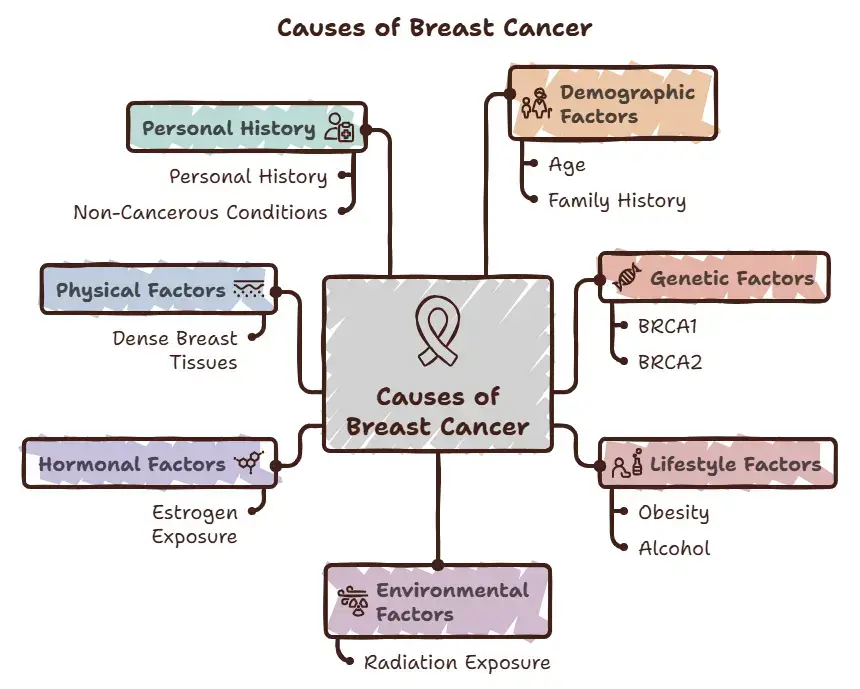
- Age
- Family history of breast or ovarian cancer
- Gene mutations are inherited, such as BRCA1 and BRCA2
- Obesity
- Alcohol
- Radiation exposure to the chest in the past
- Hormonal influence, specifically prolonged Estrogen exposure
- Dense breast tissues
- Personal history of breast cancer/any non-cancerous breast conditions
NOTICE: Having one or more causes matching your condition does not mean you have breast cancer. Confirm diagnosis through routine breast cancer screenings, ideally conducted every year.
The Most Common Early Signs of Breast Cancer in Women
The most common early signs of breast cancer in women are as follows.
- New lump/thickened area around the breast/underarm
- Breast size or shape changes
- A part of the breast/entire area seems swollen
- Orange peel-like appearance
- Nipple inversion
- Scaling, redness, or thickening of nipples
- Persistently swollen lymph nodes
Breast Cancer Signs by Age Group
The symptoms of breast cancer may vary according to the age group. For instance, women aged below 40 years may have denser breast tissues, which makes small tumours more difficult to detect through physical examination. It may appear as a lump or localised breast changes. Those aged between 40 and 59 years seem to benefit from routine screening (yearly), which helps in detecting early signs of breast cancer, like nipple changes, lumps, etc. Women aged 60+ are at high risk of breast cancer, which is also detected through routine screenings.
Stages of breast cancer
Understanding the breast cancer stages helps you determine how far the cancer has spread and allows oncologists to suggest the most relevant treatment options.
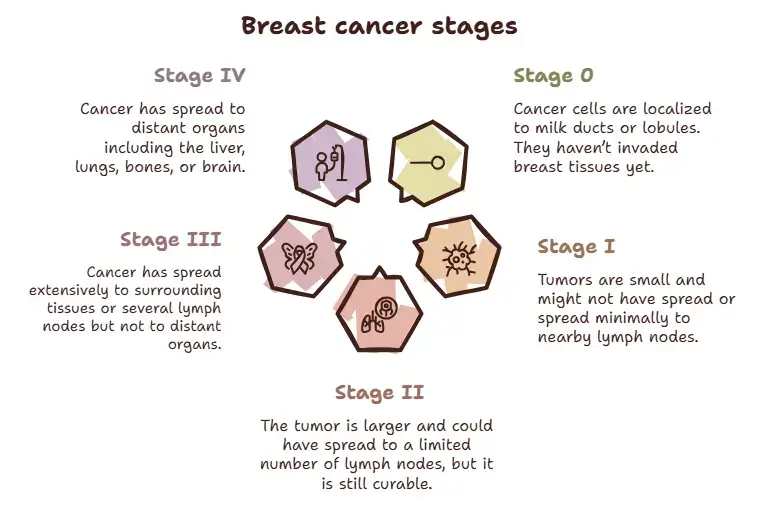
- Stage 0 – The cancer cells are localised to milk ducts or lobules. They haven’t invaded the breast tissues yet, and so it is known as the most ‘tolerable’ level of breast cancer.
- Stage I – At this stage, the tumours are small. They might not have spread yet or may have spread minimally to the nearby lymph nodes.
- Stage II – The tumour is noticeably larger here and could have spread to a limited number of lymph nodes, but it is still curable.
- Stage III – The cancer has spread extensively to the surrounding tissues or several lymph nodes but not to the distant organs.
- Stage IV – It’s the advanced stage of breast cancer called ‘metastatic breast cancer,’ wherein cancer has spread to distant organs, including the liver, lungs, bones, or brain.
Can men also develop breast cancer?
Yes, it is possible to detect breast cancer in men, but it is much rarer than in women. Approximately 1% of all the patients diagnosed with breast cancer are men, and the possibility prevails because men are born with a small amount of breast tissue, where cancer may develop.
FACT: Breast cancer is rarely detected in men in their 60s, but it may develop at any age, though. Only 1 in 100 men is diagnosed with this condition.
Treatment Options for Breast Cancer
The treatment option is personalised according to the type and stage of cancer, hormone receptor status, HER2 status, and overall health of the patient after an in-depth diagnosis and breast cancer screening. The following are the possible ways for treatment and management of breast cancer.
1. Surgery: It helps in removing cancerous tissues and may involve a tactic that conserves the breast (lumpectomy) or removes it completely (mastectomy). The patient’s lymph nodes shall be evaluated too.
2. Radiation Therapy: In this therapy, high-energy beams are used to destroy the cancer cell remains post-surgery with the aim of reducing recurrence risks.
3. Chemotherapy: This therapy includes using medications to destroy the rapidly replicating cancer cells. The formerly prescribed chemotherapy drugs are listed below.
4. Hormone Therapy: It is specifically used for patients diagnosed with hormone-receptor-positive breast cancer. The therapy intends to reduce the abnormal effects of estrogen using the medications listed below.
5. Targeted Therapy: This therapy focuses on specific proteins or genetic changes that foster the growth of cancer cells. For instance, targeted HER2 treatments are used in those diagnosed with HER2-positive breast cancer.
6. Immunotherapy: It allows the immune system to detect and attack certain breast cancer cells. Immunotherapy may be the best option for specific advanced or triple-negative breast cancers.
WARNING! Do not use any cancer treatment without consulting an oncologist. Experimenting with any random medications/therapies or repurposed drugs can lead to life-threatening consequences.
How long can you live with breast cancer?
The life expectancy rate varies among breast cancer patients according to how far the cancer has spread at diagnosis. If detected in the localised or early stage, the overall 5-year relative survival rate is more than 90% in most cases. However, advanced metastatic cases require consistent long-term management.
What are the psychological effects of breast cancer?
The effects of breast cancer span beyond physical impact. It may affect women psychologically, causing severe anxiety, adjustment disorders, clinical depression, or persistent fear of recurrence. The affected female unknowingly tolerates the altered body image, undergoes cognitive impairment and chronic fatigue, and keeps grieving over the changed physical functioning or health loss.
FAQs
What are the earliest signs of breast cancer in women?
Typically, the early signs of breast cancer in women include a new/painless lump or mass in the breast/armpit. It can also be an unexpected change in the breast size or shape, or skin resembling orange peel.
Is breast pain always a signs of breast cancer?
No, it is extremely common and need not be an early signs of breast cancer in women. It may be caused by non-cancerous issues like muscle strain, cysts, poorly fitted bras, or hormonal fluctuations.
At what age should women start breast cancer screening?
Major health organizations recommend that women start breast cancer screenings every other year after they reach 40.
Can breast cancer symptoms appear suddenly?
Mostly, the early signs of breast cancer in women develop gradually over months or years, but certain symptoms are sudden.
Are breast cancer symptoms different in younger women?
Generally, the symptoms of breast cancer are identical across age groups in women, whether young or old.
What are the survival rates when breast cancer is detected early?
The 5-year relative survival rate is around 99% if the early signs of breast cancer in women are sensed promptly (when localised to the breast) before spreading to the lymph nodes.
Conclusion
Trying to spot the early signs of breast cancer in women can be life-saving. It helps in early diagnosis and treatment so that further complications can be prevented. While it is a growing concern across the globe, women must have the basic know-how about breast cancer and screening options and pay prompt attention to any unusual changes.
Are you a pharmaceutical business seeking popular cancer medications in bulk? Or a healthcare provider searching for 100% guaranteed-quality anti-cancer drugs online? Specialitymedz.com is one of the best manufacturers and suppliers to get in touch with. Our products are delivered worldwide, including the UK, USA, Australia & Canada. We’re handling third-party manufacturing, contract manufacturing, and bulk production of custom formulations too.
Comments (0)
Leave A Comment