

Cats are lovely as pets, but they come with a responsibility. Whether you own them or farm them in the UK, USA, Australia, Canada, or anywhere in the world, feline healthcare is a thing! Having a dedicated deworming schedule helps with parasite control and prevents transmission to owners/other pets living together. Fenbendazole is among the most popular dewormers, and determining the correct Fenbendazole dosage for cats helps in ensuring safety and efficacy.
This blog is a complete breakdown of everything you should know related to Fenbendazole dosage for cats worldwide.
What is fenbendazole for cats & how does it work?
Panacur Fenbendazole for cats is an antiparasitic treatment. Besides cats, it is recommended for deworming in other pets like dogs, herds/cattle/livestock, and more animals. This benzimidazole anthelmintic works by impairing the energy metabolism of parasites, making them starve, and triggering removal from the cat’s body.
This anti-worm therapy is mainly used for treating intestinal parasite infections caused by roundworms, hookworms, and tapeworms (certain species).
Why Dosage Matters
Fenbendazole dosage for cats is more easily accessible than most pet owners think. What matters is giving an accurate dosage to the pet. Underdosing shall cause treatment failure and has the chance of resistant parasite strains. Overdosing, on the other hand, increases the risk of severe side effects. In addition, consistency is the key when dosing Fenbendazole to cats.
A cat’s metabolism varies according to age, size, and overall health conditions. Precise dosage is however, determined by the veterinarian after assessing physical health and the type/complexity of underlying symptoms.
| Do you know? It’s easy to calculate Fenbendazole dosage for cats, but a slight miscalculation leads to reduced efficacy of the entire treatment.
Standard Fenbendazole Dosage for Cats per Pound
The standard Fenbendazole Dosage for Cats per pound happens to be 22.7mg. In kgs, it can be applied as 50 mg per kilogram of the cat’s body weight. The vet shall calculate the correct dose based on this, even if prescribing Panacur 150 mg. Dosage is divided into three to five doses, which will then be consumed once daily.
Fenbendazole Dosage Calculation
It’s great to have the basic formula for calculating fenbendazole dosage for cats. The calculation is simple: cat’s body weight x the standard dose (22.7 mg/pound) = the ideal dosage for the cat.
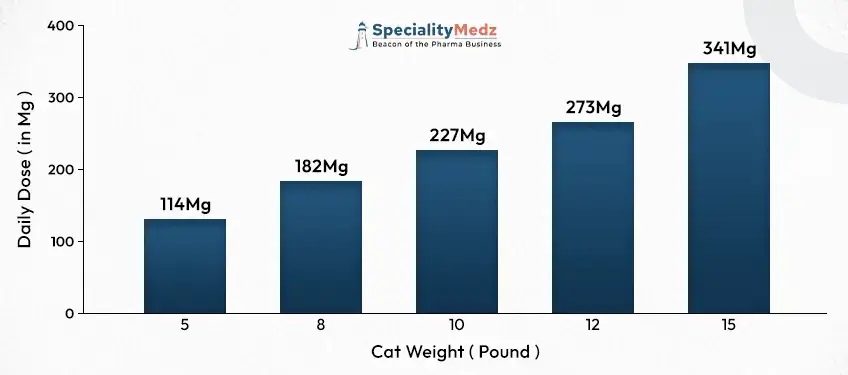
Let’s understand it further with an example. Assume your cat weighs 10 pounds, so their ideal Fenbendazole dosage can be calculated as 10 x 22.7 mg = 227 mg per dose. The veterinarian’s guidance is, however, required to determine whether this dosage should be used for three or five days. If required, the dosage could be adjusted slightly according to the severity of infection.
Fenbendazole Dosage Chart for Cats
Here is the quick view on the Fenbendazole dewormer for cats from the perspective of weight-related dosage criteria. Pet owners or veterinary suppliers may use it as a reference, but medical guidance should be considered for the best results and safety.
Dosage for Different Age Groups
Fenbendazole dosage for cats largely relies on different age groups. For instance,
- Younger kittens – mostly prescribed with an initial dose (low strengths)
- Adult cats can be treated with standard-dose dewormers like Panacur 150 mg
- Aged cats – these have good tolerance to anti-worm therapies and are therefore prescribed with relevant dosage strengths
Duration & Frequency of Treatment
Typically, Fenbendazole dosage for cats is given for a specific duration determined according to factors such as
- Age
- Bodyweight
- Complexity of intestinal parasites
It is ideally dosed for 3 to 5 consecutive days with a once-daily frequency.
How frequently to deworm? Mostly, routine deworming for cats is scheduled every 3 to 6-month interval. However, if you live in a high-risk environment, your cat might need more frequent deworming.
How to Administer Fenbendazole to Cats?
It is extremely easy to give fenbendazole dosage for cats. However, one should be cautious enough to make them consume a mixed portion entirely for optimal deworming effects.
This drug is given orally by crushing the tablet and mixing it with wet food. One tablet is to be administered at a fixed time daily for 3 or 5 days consecutively.
Signs Your Cat Needs Deworming
So, when exactly should you give Fenbendazole dosage cats?
The key is to recognise the early signs of parasitic worm infections. For instance, diarrhoea, vomiting, worms visible in faeces, weight loss, etc. Some cats may undergo reduced appetite, a bloated abdomen, or a dull coat due to the presence of intestinal worms. At times, some cats may seem normal but still carry parasites in their digestive tract. Hereby, routine deworming is strongly recommended for household pets like cats and dogs.
Side Effects of Fenbendazole in Cats
Fenbendazole is mostly well-tolerated in very young kittens to adult cats. However, some minor side effects are possible, like:
- Diarrhea
- Vomiting
- Loss of appetite (temporary)
They shall settle down as the effects of this dewormer reduce in their bloodstream.
Managing side effects: Keep the cat hydrated and watch the side effects closely to seek medical help promptly. Symptoms reported within 48 hours are more likely to be treated effectively.
When to Consult the Veterinarian?
Due to information overload online regarding Fenbendazole Dosage cats, it seems confusing to determine the correct dose. Hence, professional guidance is necessary. You may worry less if you’ve availed a routine deworming program from the vet, but medical consultation is a must for controlling severe parasite infections in cats.
Consult the Veterinarian if the symptoms fail to improve with regular dosing or if the pet is diagnosed with any medical conditions. The vet should be consulted specifically for treating pregnant cats, kittens, or severely infected ones. This helps in exploring proper dosing and alternative treatments for effective parasite management.
Conclusion
You now have enough information related to fenbendazole dosage for cats. Caring for your cat’s health keeps you away from cross-contamination, too.
Be it for kittens or adult cats, it is important to consult the Veterinarian first and get a relevant dosage prescribed. Next, give the dosage correctly for effective parasite control. Alongside, maintain proper hygiene during and after treatment to prevent reinfection.
Source your stash from a globally trusted Panacur 150 mg tablets wholesaler like Specialitymedz.com. You’ll receive delivery of up to 1 million tablets/month worldwide best deals. Request a quote now?
FAQs
How much fenbendazole should I give my cat?
The standard Fenbendazole dosage for cats is about 22.7 mg/pound of their body weight. This dosage is given once daily for 3 to 5 consecutive days. The vet’s guidance should be considered final.
What happens if my cat vomits after taking fenbendazole?
If the cat vomits just after taking this dewormer, the pet has likely not absorbed the medication, and so a repeat dose should be given.
How many times a day should I give fenbendazole to my cat?
Fenbendazole is mostly given once daily consecutively for 3 to 5 days. Don’t use multiple times in a day unless prescribed.
Is fenbendazole safe for kittens during intake?
Yes, Fenbendazole for kittens is safe, but it should be administered in exact amounts as advised.
What precautions should I take during treatment?
Ensure giving accurate Fenbendazole dosage for cats, maintain proper hygiene, watch for side effects, and complete the full course of treatment for expected parasite clearance.
Comments (0)
Leave A Comment